
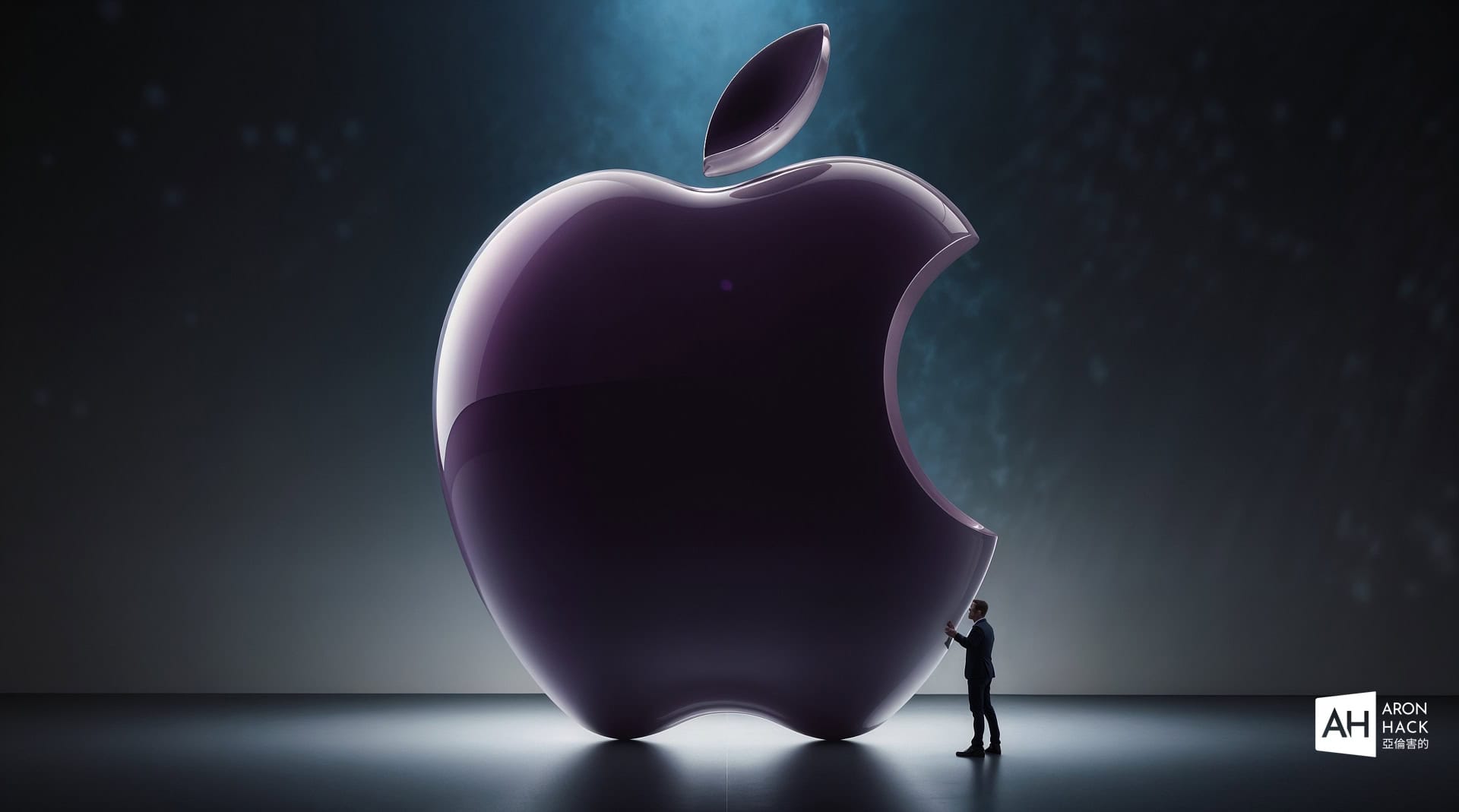
Tim Cook's announcement of Apple's openness to AI acquisitions marks a significant shift in the company's strategy. With impressive Q3 results and revenue of $94 billion, Apple is well-positioned to invest heavily in AI. The company is embedding AI across its devices and platforms, growing investments, and reallocating resources internally. Despite criticism for lagging behind competitors, Apple maintains its commitment to quality over speed. Recent acquisitions and potential partnerships with AI leaders like OpenAI and Anthropic demonstrate Apple's determination to accelerate its AI roadmap. Cook remains confident in the iPhone's relevance amidst emerging AI hardware, viewing new devices as complementary rather than substitutes. This strategic pivot promises enhanced AI capabilities while maintaining Apple's focus on privacy, security, and user experience.
In a significant shift that highlights Apple’s intensifying focus on artificial intelligence, CEO Tim Cook has announced that the company is “open to” AI acquisitions as part of its strategy to accelerate its roadmap in this competitive space. This revelation, made during Apple’s third-quarter earnings call for 2025, signals a potential departure from the company’s historically cautious approach to large-scale acquisitions and underscores the growing importance of AI to Apple’s future.
“We see AI as one of the most profound technologies of our lifetime. We are embedding it across our devices and platforms and across the company. We are also significantly growing our investments,” Cook stated during the earnings call with investors. This statement comes at a critical juncture as Apple navigates the rapidly evolving AI landscape where competitors like Microsoft, Google, and Meta have made substantial investments and progress.
Apple’s financial position certainly supports an aggressive AI strategy. The company reported impressive third-quarter results with revenue reaching $94 billion, marking a 10 percent increase compared to the same period last year. iPhone sales grew by 13 percent year over year to $44.6 billion, while the company’s services segment, which includes subscriptions to Apple TV+, iCloud, and Apple Music, saw a 13 percent increase to a record $27.4 billion. This strong financial foundation provides Apple with considerable resources to pursue acquisitions that could enhance its AI capabilities.
The timing of Cook’s comments is particularly noteworthy as Apple has been criticized for falling behind in the AI race. While competitors have launched advanced generative AI products, Apple’s efforts with Apple Intelligence have been perceived as lagging. This perception has been reinforced by delays in the release of promised AI features, most notably the AI-powered revamp of Siri, which has reportedly been pushed back to spring 2026 due to reliability concerns. “We’re making good progress on a more personalized Siri,” Cook assured during the earnings call, though specific timelines remain unclear.
Recent reports from Bloomberg have suggested that Apple may be considering partnerships with established AI players like OpenAI and Anthropic to power its “LLM Siri.” Furthermore, industry sources indicate that Apple executives have discussed acquiring Perplexity AI, a move that could potentially cost between $25 and $30 billion but would give Apple access to an AI-powered search engine and significant AI talent.
Cook revealed that Apple has already acquired seven companies this year, though none were “huge in terms of dollar amount.” He further stated that Apple is “not stuck on a certain size company” as a potential acquisition target, suggesting that larger deals could be on the table if they align with Apple’s AI strategy. The frequency of these acquisitions—approximately one every several weeks—indicates an accelerated approach to bringing external technology and talent into the Apple ecosystem.
This strategic shift comes after Apple’s leadership reorganization earlier this year, which saw Mike Rockwell, previously head of Vision Pro, taking over as the leader of AI and Siri development in March. The company is also “reallocating a fair number of people to focus on AI features within the company,” according to Cook, demonstrating internal restructuring to prioritize AI development.
While Apple has faced criticism for being late to the AI game, the company has defended its methodical approach. Apple’s philosophy has consistently been that it doesn’t need to rush—launching the wrong features or products just to be first would be contrary to its commitment to quality and user experience. This stance was reaffirmed when the company delayed the launch of its revamped Siri because it wasn’t “reliable” enough for a broad release.
Despite these delays, Apple has launched more than 20 Apple Intelligence features, including visual intelligence, cleanup, and writing tools. Additional AI capabilities planned for later this year include live translation and an AI-powered workout companion, showcasing Apple’s commitment to integrating AI across its product ecosystem in a measured, quality-focused manner.
When asked about the potential impact of emerging AI hardware on iPhone’s dominance, Cook expressed confidence in the continued relevance of Apple’s flagship product. “It’s difficult to see a world where iPhone’s not living in it,” Cook stated, adding that new AI devices would likely be “complementary devices, not substitutions.” This perspective contrasts with Meta CEO Mark Zuckerberg’s recent suggestion that AI glasses would become the primary form factor for interacting with artificial intelligence.
The increased investment in AI is also driving higher capital expenditure for Apple, though the company noted it continues to employ a hybrid model where it relies on third parties for some capital investments. This approach allows Apple to expand its AI capabilities without exponential growth in direct capital spending.
As Apple continues to navigate the complex and rapidly evolving AI landscape, Cook’s openness to acquisitions represents a pragmatic recognition that external partnerships and acquisitions may be necessary to complement internal development efforts. The company’s strong financial position, coupled with its methodical approach to product development, positions it to make strategic moves that could significantly enhance its AI capabilities while maintaining its commitment to privacy, security, and user experience.
For developers and the broader Apple ecosystem, this strategic pivot signals potential new opportunities as Apple expands its AI capabilities and integrates them across its platforms. For consumers, it promises more intelligent, helpful, and personalized experiences across Apple devices—albeit on a timeline that prioritizes reliability and quality over speed to market.
As the tech industry continues its AI transformation, Apple’s approach—combining significant internal investment with strategic acquisitions and partnerships—may provide a template for how established companies can adapt to disruptive technologies while staying true to their core values and strengths.


