
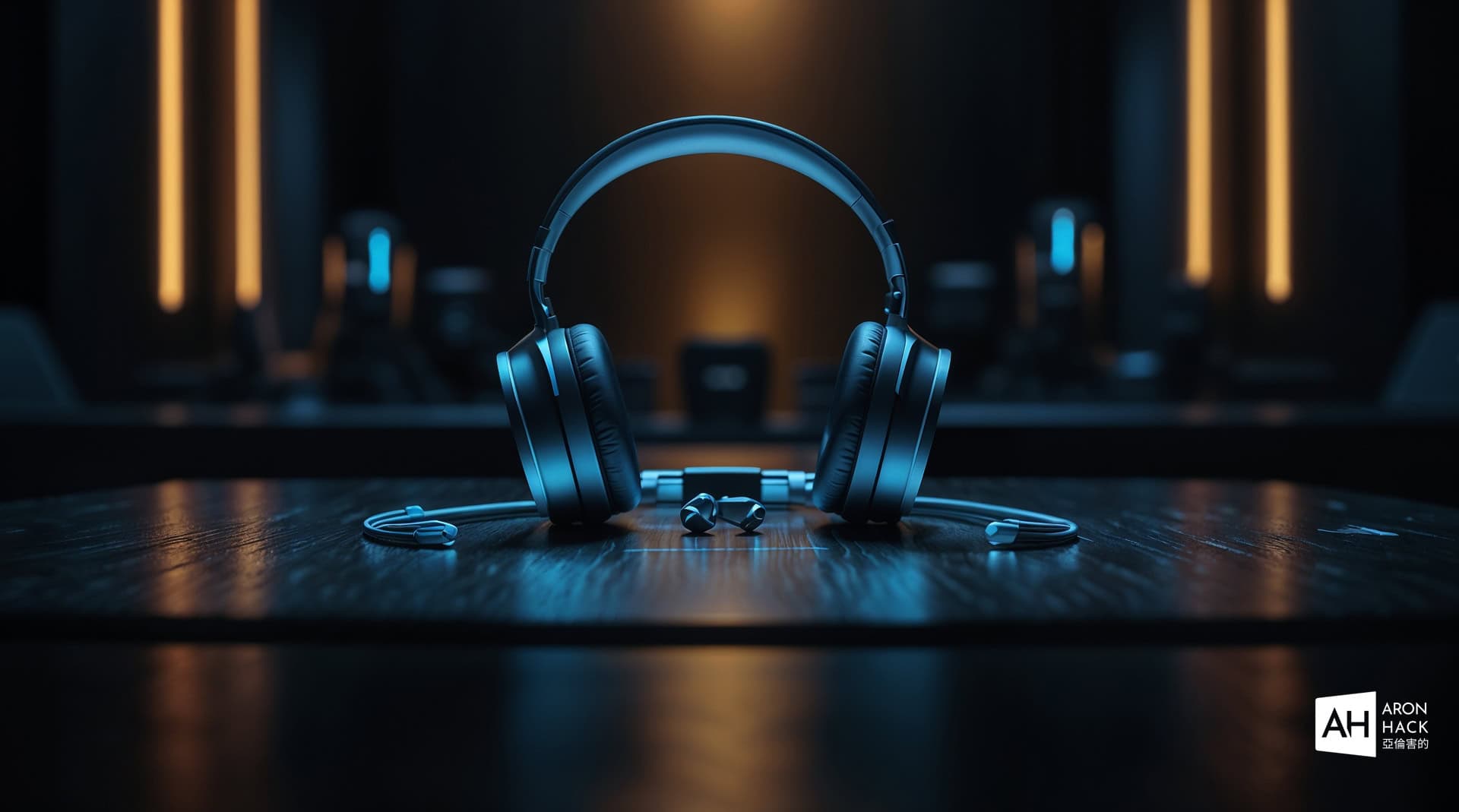
Apple's AirPods Max have undergone a significant transformation in 2025, expanding their utility beyond casual listening into professional audio production. The spring 2025 iOS 18.4 update introduced game-changing features, including 24-bit, 48 kHz lossless audio and ultra-low-latency performance when connected via USB-C. These enhancements position AirPods Max as serious contenders for audio engineers, video editors, and music producers. The update also improves Personalized Spatial Audio, benefiting professionals working with immersive media. While retaining their exceptional comfort and seamless device switching capabilities, AirPods Max now offer professional-grade audio quality and near-zero latency, making them suitable for critical listening and production work across the Apple ecosystem.
The audio landscape has dramatically shifted in 2025, with Apple’s AirPods Max Check it out undergoing a transformation that significantly expands their utility beyond casual listening. While the 2024 hardware refresh of Apple’s premium over-ear headphones was initially met with mild disappointment for its minimal changes, the spring 2025 software update has proven to be the catalyst that positions these headphones as serious contenders in professional audio production spaces. This evolution represents Apple’s commitment to enhancing existing hardware through thoughtful software improvements, creating a more versatile tool for both everyday users and audio professionals alike.
When Apple released the USB-C version of AirPods Max in 2024, many critics viewed it as merely a port update with new color options. The hardware remained largely unchanged from the original 2020 model, still utilizing the older H1 chip rather than the more advanced H2 chip found in the AirPods Pro 2 Check it out. However, the spring 2025 iOS 18.4 update has fundamentally altered the value proposition of these premium headphones by addressing one of their most significant limitations: latency. This update brings professional-grade capabilities to a device previously considered primarily for casual listening, effectively extending its usefulness into creative workspaces.
The most significant advancement introduced in iOS 18.4 is the ability for AirPods Max to deliver 24-bit, 48 kHz lossless audio when connected via USB-C cable. This upgrade preserves more of the original studio recording details, giving listeners access to the full range of sonic information captured during production. While Apple boasts that Apple Music now offers over 100 million songs in lossless audio format, the true beneficiaries of this feature aren’t casual listeners who might struggle to discern the difference between standard and lossless audio. Instead, this enhancement serves professionals who require pristine audio quality for detailed analysis and production work.
More importantly, the update introduces ultra-low-latency audio when connected via USB-C cable. This advancement effectively eliminates the delay between source and headphone output, addressing a critical limitation that previously made Bluetooth headphones unsuitable for professional audio and video production workflows. Production professionals require frame-accurate precision when editing audio, mixing tracks, or synchronizing sound with video. The near-zero latency now achievable with AirPods Max opens new possibilities for audio engineers, video editors, and music producers who can now leverage these headphones for studio work with confidence that what they’re hearing is perfectly synchronized with their creative timeline.
The professional applications extend further into specialized workflows, particularly with Personalized Spatial Audio. Audio engineers working in Logic Pro can now create immersive spatial audio experiences and immediately preview them through AirPods Max with accurate timing. This capability streamlines the production process for content destined for spatial audio playback, an increasingly important format as immersive media experiences gain prominence across entertainment platforms. The gaming community also benefits substantially from this update, as the reduced latency brings audio response time in line with what players experience through built-in speakers on Apple devices, eliminating the frustrating delay that previously plagued wireless gaming audio.
Despite these impressive software improvements, the AirPods Max still retain the characteristics that made them appealing from their inception. Their exceptional comfort remains a standout feature, allowing for extended wear during long editing sessions or transcontinental flights without the ear fatigue common to many over-ear headphones. The balanced weight distribution and breathable mesh canopy make them suitable for prolonged professional use, while the 20-hour battery life ensures they’ll last through even the most demanding production days without requiring a recharge.
The seamless device switching capability continues to be the AirPods Max’s killer feature, allowing users to move between iPhone, iPad, Mac, and Apple TV without manual reconnection processes. This functionality becomes increasingly valuable in professional environments where creators might need to reference audio across multiple devices during a production workflow. While competitors like Sony’s WH-1000XM6 headphones Check it out and Bose QuietComfort Ultra Check it out have made strides in multi-device connectivity, they typically limit connections to two devices simultaneously, whereas AirPods Max integrate with unlimited Apple devices linked to the same Apple ID.
Audio quality remains competitive with industry leaders, with AirPods Max delivering detailed sound reproduction that reveals nuances in music and dialogue that might be missed with lesser headphones or earbuds. When paired with Apple’s latest hardware, such as the M4 iPad Pro Check it out with Tandem OLED display, the combined audio-visual experience approaches theatrical quality, making them ideal for professionals who need to evaluate content across different quality tiers. The active noise cancellation performance similarly matches or exceeds competitors, providing the isolation necessary for critical listening in varied environments.
However, not all of the AirPods Max limitations have been addressed through software updates. The $549 price point remains significantly higher than premium offerings from Sony and Bose, with the Sony WH-1000XM6 priced approximately $100 less while offering comparable features. For users without deep integration into the Apple ecosystem, this price differential becomes difficult to justify. Additionally, Apple’s decision not to update the hardware with the H2 chip continues to be puzzling, as it denies AirPods Max users access to advanced features like Adaptive Audio and improved noise cancellation that AirPods Pro 2 users have enjoyed since 2022.
The market positioning of AirPods Max in 2025 remains clear: these are premium headphones for Apple ecosystem devotees who demand seamless integration across multiple devices. The new professional audio capabilities expand their appeal to creative professionals who work within Apple’s ecosystem, but the value proposition diminishes significantly for those who primarily use Windows or Android devices. For professionals regularly working across multiple Apple devices who need reference-quality audio with ultra-low latency, the investment may be justifiable despite the premium price.
For casual listeners weighing their options, the decision largely hinges on their commitment to Apple’s ecosystem. Those who regularly use multiple Apple devices will find the seamless switching capability alone worth the premium, while others might be better served by the Sony WH-1000XM6 or even the previous XM5 model, which offer comparable audio quality and noise cancellation at a lower price point. The professional audio enhancements, while impressive, won’t meaningfully improve the experience for users who primarily stream music or watch videos.
As we look toward the future of Apple’s audio technology, the 2025 software update to AirPods Max demonstrates the company’s commitment to extending the lifespan of its premium products through meaningful software enhancements. Rather than forcing professionals to purchase new hardware, Apple has breathed new life into existing devices through thoughtful software optimization. This approach not only benefits consumers but also suggests a sustainable product strategy that values longevity over forced obsolescence. While AirPods Max still carry some of the same drawbacks they’ve had since launch, their evolution into professional-grade tools represents a significant milestone in the maturation of consumer audio products into professional production equipment.


References: Candy96 Casino online
References: Candy96 apk
References: Irwin Casino Bonus ohne Einzahlung
References: First Casino Test
References: Löwen Play Casino Bonus ohne Einzahlung
References: Lollybet Casino Bonus Code