
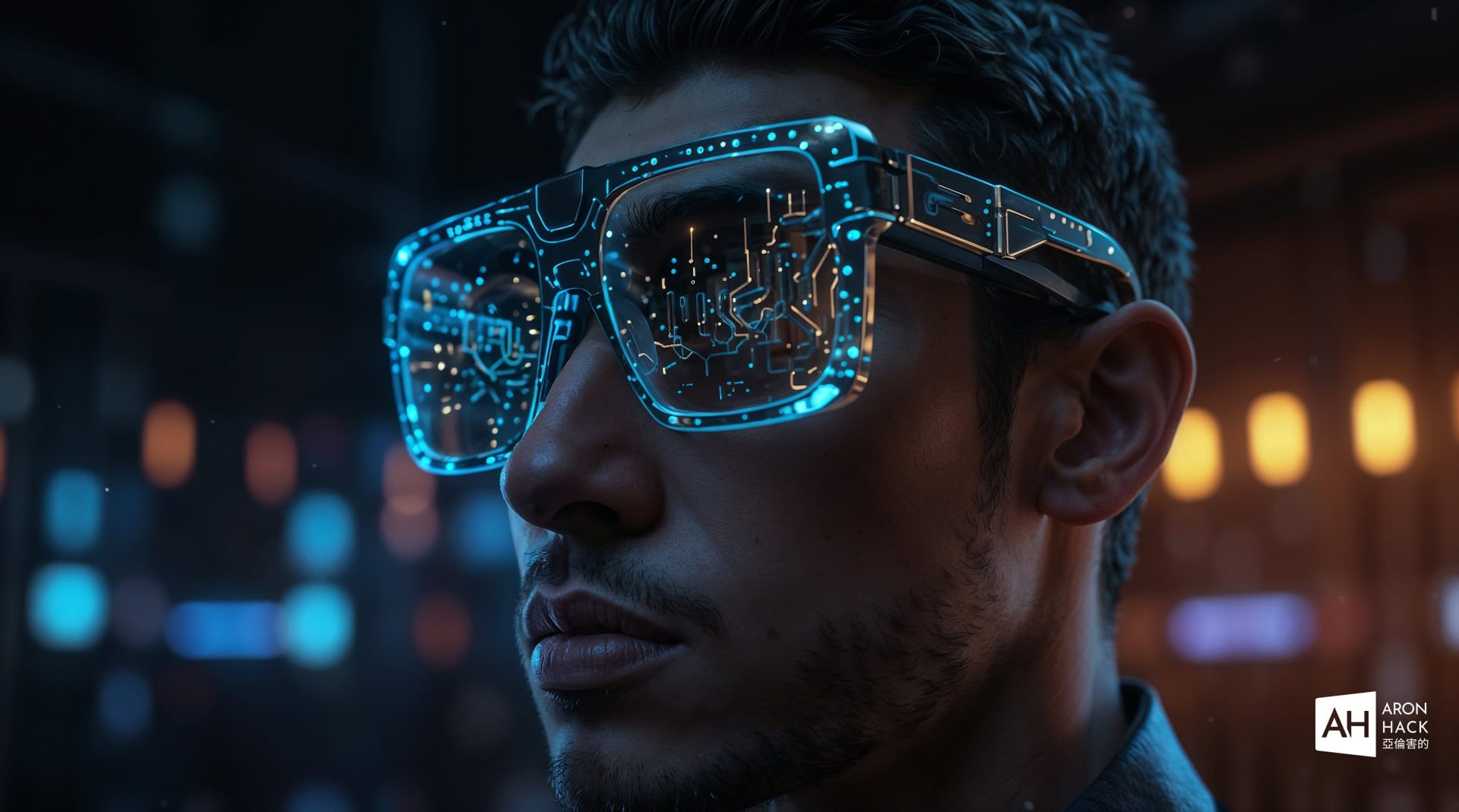
Goertek, a Chinese manufacturer, is strategically positioning itself as a leader in extended reality (XR) technologies. The company is focusing on AI-integrated smart glasses and MicroLED display technology, aiming to dominate the AR/VR hardware ecosystem. Their AI glasses feature advanced processing capabilities, improved form factors, and enhanced battery life. Goertek's $100 million investment in Plessey Semiconductors gives them access to cutting-edge MicroLED technology, offering superior brightness and energy efficiency for AR applications. As a major supplier and contract manufacturer, Goertek has unique industry insights and specialized production facilities. Their strategy involves serving established brands while developing proprietary technologies, potentially enabling them to create their own consumer-facing brand or licensing business in the future.
In the rapidly evolving landscape of extended reality (XR) technologies, Chinese manufacturer Goertek has emerged as a pivotal force, strategically positioning itself at the intersection of hardware innovation and next-generation display technology. As global tech giants race to develop the next breakthrough in spatial computing devices, Goertek’s dual focus on AI-integrated smart glasses and cutting-edge MicroLED display technology represents a calculated move to dominate the AR/VR hardware ecosystem in the coming years.
Goertek has established itself as a major player in the AR/VR terminal device OEM market, providing turnkey manufacturing solutions for some of the industry’s most prominent brands. The company’s renewed strategic focus on AI glasses marks a significant pivot toward higher-value components in the extended reality supply chain. According to their 2024 annual report, at least four of nine major R&D projects currently underway at Goertek are centered on AR/VR technologies, underscoring the company’s commitment to this sector as a primary growth engine.
The technological innovations driving Goertek’s AI glasses are multi-faceted and address several critical challenges that have historically limited consumer adoption of AR wearables. By integrating advanced AI processing capabilities directly into their glasses architecture, Goertek is enabling contextual computing experiences that respond intelligently to user environments and behaviors. This represents a significant leap beyond the current generation of smart glasses, which predominantly serve as simple display extensions or basic notification systems for smartphones.
A key differentiator in Goertek’s approach is their emphasis on form factor optimization. Through innovations in component miniaturization and thermal management, the company has made significant strides in creating AI glasses that more closely resemble traditional eyewear rather than the bulky, tech-forward designs that have dominated the market thus far. This evolution addresses one of the most persistent barriers to mainstream AR adoption – the social acceptability of wearing such devices in everyday settings.
When compared to current market offerings, Goertek’s AI glasses architecture demonstrates notable advantages in processing efficiency and battery life. While competitors have often sacrificed runtime for computational power or vice versa, Goertek appears to have achieved a more balanced approach through custom silicon solutions and optimized power management systems, enabling all-day wearability without compromising on AI functionality.
Perhaps the most significant aspect of Goertek’s strategic positioning lies in their aggressive investment in MicroLED display technology. In a landmark move, the company recently secured a $100 million investment in Plessey Semiconductors, a UK-based pioneer in MicroLED manufacturing. This acquisition provides Goertek with direct access to cutting-edge display technology that addresses many of the limitations inherent in current AR/VR visual systems.
MicroLED technology represents a quantum leap over traditional display technologies like LCD and OLED in several crucial aspects. Unlike OLEDs, which rely on organic materials with inherent luminance limitations, MicroLEDs utilize inorganic gallium nitride (GaN) to create self-emissive displays with superior brightness capabilities. This characteristic is particularly critical for AR applications, where displays must compete with ambient light in various environments. According to industry analyses, MicroLED displays can achieve brightness levels up to five times greater than current OLED alternatives, making them substantially more visible in outdoor settings.
The energy efficiency of MicroLED technology provides another significant advantage for wearable applications. With power consumption approximately 90% lower than comparable LCD displays and 50% more efficient than OLEDs at equivalent brightness levels, MicroLED technology directly addresses one of the most persistent challenges in AR glasses design – battery life. This efficiency enables Goertek to create devices with substantially longer runtime between charges without increasing battery size or weight.
However, manufacturing MicroLED displays at scale presents formidable technical challenges. The process requires precise placement of millions of microscopic LED elements with near-perfect yield rates. Through their investment in Plessey, Goertek has gained access to proprietary manufacturing techniques that reportedly overcome many of these production hurdles, potentially giving them a significant competitive advantage as the technology moves toward mass commercialization.
From a strategic industry perspective, Goertek has methodically strengthened its position within the global technology supply chain. As a major Apple supplier and contract manufacturer for AR/VR hardware, the company has established trusted relationships with many of the world’s leading technology brands. This privileged position provides Goertek with unique insights into market trajectories and consumer preferences, allowing them to align their R&D investments with emerging industry trends.
Goertek’s manufacturing capabilities represent another core competitive advantage. The company has invested heavily in advanced production facilities and automated assembly systems specifically optimized for AR/VR devices. This specialized infrastructure enables Goertek to achieve production efficiencies that would be difficult for new entrants to replicate, creating a sustainable competitive moat in the hardware manufacturing space.
The market potential for Goertek’s innovations appears substantial. The MicroLED market alone is projected to grow from approximately $3.67 billion in 2024 to over $1.86 trillion by 2035, according to industry forecasts. As spatial computing applications expand beyond gaming and entertainment into enterprise, healthcare, and education, the demand for high-performance AR/VR hardware is expected to accelerate dramatically.
Goertek’s strategy for market penetration appears to follow a two-pronged approach. On one front, the company continues to serve as a contract manufacturer for established technology brands, providing them with cutting-edge components and assembly services. Simultaneously, Goertek is developing proprietary technologies and reference designs that could eventually enable them to establish their own consumer-facing brand or higher-margin licensing business.
Looking toward the future, Goertek’s roadmap suggests an increasing integration between their AR hardware and emerging AI ecosystems. The company has invested in developing spatial computing capabilities that will enable their devices to interact more naturally with virtual objects and environments. This approach aligns with the broader industry shift toward more contextually aware computing experiences, where AI assistants can leverage spatial data to provide more relevant and helpful interactions.
The integration of digital twin simulation technologies into Goertek’s AR platforms points toward expanded enterprise applications, particularly in manufacturing, healthcare, and urban planning. By creating virtual replicas of physical systems that can be manipulated and analyzed in real-time through AR interfaces, Goertek is positioning its technology as a critical tool for the next generation of industrial applications.
In assessing Goertek’s strategic moves, it becomes clear that the company is executing a deliberate plan to climb the AR/VR value chain. Rather than remaining solely in the relatively low-margin business of device assembly, Goertek is systematically acquiring and developing proprietary technologies that command premium pricing and create deeper technological moats. Their $100 million investment in Plessey Semiconductors exemplifies this approach, providing them with exclusive access to advanced MicroLED technology that few competitors can currently match.
The company’s 2023 acquisition of Shangyu Optoelectronics Technology, valued at 1.119 billion yuan, further demonstrates their commitment to vertical integration in the AR/VR supply chain. By bringing critical optical component manufacturing in-house, Goertek gains greater control over both quality and cost structures, while reducing dependency on external suppliers.
For the broader AR/VR industry, Goertek’s strategic positioning suggests an accelerating maturation of the hardware ecosystem. As component technologies like MicroLED displays and specialized AI processors move from research labs to mass production, the performance and form factor of AR/VR devices will improve dramatically. This technical evolution, coupled with expanding software capabilities, could finally unlock the mass-market potential that has long been predicted for spatial computing technologies.
From an investment perspective, Goertek represents an intriguing proxy for exposure to the growing AR/VR market without the direct consumer risks associated with brand-name device manufacturers. By supplying components and manufacturing services to multiple leading technology companies, Goertek stands to benefit from the overall growth of the spatial computing sector regardless of which specific brands ultimately dominate consumer markets.
In conclusion, Goertek’s strategic focus on AI glasses and MicroLED technology positions the company as a crucial architect of the future AR/VR hardware landscape. Through vertical integration, strategic acquisitions, and targeted R&D investments, Goertek has established a comprehensive technological foundation that addresses many of the persistent challenges in AR/VR device design. As spatial computing continues its transition from specialized applications to mainstream computing platforms, Goertek’s innovations in display technology and AI integration will likely play an increasingly central role in shaping how humans interact with digital information in the physical world.


References: Amonbet Casino Bonus ohne Einzahlung analyticsjobs.in
References: Winningz Casino Bonus ohne Einzahlung search.circl.lu
References: Venlo Casino Bonus nashi-progulki.ru
References: Nino Casino Bonus
References: Gorilla Casino Bonus ohne Einzahlung
References: Frumzi Casino Erfahrungen
References: Malina Casino Bonus ohne Einzahlung
References: Candy96 free spins
References: Löwen Play Casino Erfahrungen
References: Lollybet Casino Spiele